Columbus by Joaquin Miller
Columbus by Joaquin Miller
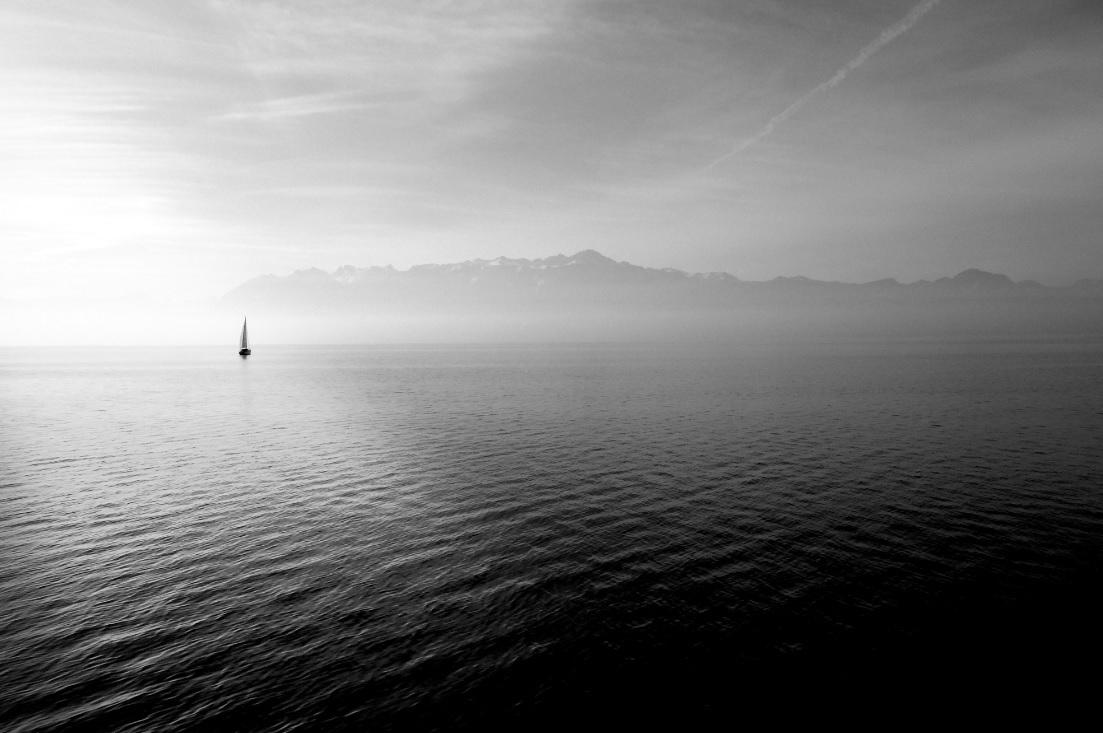
Behind him lay the gray Azores,
Behind the Gates of Hercules;
Before him not the ghost of shores,
Before him only shoreless seas.
The good mate said: “Now must we pray,
For lo! the very stars are gone.
Brave Adm’r’l, speak; what shall I say?”
“Why, say: ‘Sail on! sail on! and on!'”
“My men grow mutinous day by day;
My men grow ghastly wan and weak.”
The stout mate thought of home; a spray
Of salt wave washed his swarthy cheek,
“What shall I say, brave Adm’r’l, say,
If we sight naught but seas at dawn?”
“Why, you shall say at break of day:
‘Sail on! sail on! sail on! and on!'”
They sailed and sailed, as winds might blow,
Until at last the blanched mate said:
“Why, now not even God would know
Should I and all my men fall dead.
These very winds forget their way,
For God from these dread seas is gone.
Now speak, brave Adm’r’l, speak and say?”
He said: “Sail on! Sail on! and on!”
They sailed. They sailed. Then spake the mate:
“This mad sea shows his teeth tonight.
He curls his lips, he lies in wait
With lifted teeth, as if to bite!
Brave Adm’r’l, say but one good word:
What shall we do when hope is gone?
The words leapt like a leaping sword;
“Sail on! sail on! sail on! and on!”
Then, pale and worn, he kept his deck,
And peered through darkness. Ah, that night
Of all dark nights! And then a speck?
A light! a light! a light! a light!
It grew, a starlit flag unfurled!
It grew to be Time’s burst of dawn.
He gained a world; he gave that world
Its grandest lesson; “On! sail on!”











Miller’s retelling of Columbus turns the famous voyage into a study in endurance rather than triumph. The mate’s repeated pleas and the Admiral’s unwavering ‘Sail on!’ refrain build a rhythm that makes the final sighting of light feel earned, almost like a reward for sheer stubbornness. The closing claim that he gave the world its grandest lesson lands hard after all that darkness. For anyone who enjoys that same spirit of pushing through uncertainty, bike stunt extreme offers a playful way to test your nerve.
Joaquin Miller’s Columbus turns a historical voyage into a study in sheer endurance, and the repeated refrain “Sail on! sail on!” gains weight each time the mate’s fear deepens. The line about God being gone from those dread seas is the poem’s darkest moment, making the final speck of light feel earned rather than sentimental. The closing claim that he gave the world its grandest lesson lands because the poem has already shown how close hope came to breaking. It reads like a companion to the same restless spirit found in something like scooby doo run, where simply keeping moving is the whole test.
Miller turns Columbus’s famous refrain into something almost hypnotic, and the repetition of “Sail on! sail on! sail on! and on!” builds real tension as the crew’s fear deepens. What strikes me most is how the poem treats hope not as a sudden rescue but as a stubborn decision made again and again, even when the mate says God seems absent from those dread seas. The final image of the light becoming “Time’s burst of dawn” earns its grandeur because the earlier darkness felt so heavy. Persistent stubbornness against the unknown is a theme that also fits visual experiments like a glitch gif generator (glitch effect gif maker), where repetition and distortion become part of the message.
Miller’s Columbus reads almost like a chant, with the repeated “Sail on!” carrying the crew from doubt and mutiny to the final cry of “A light!” The mate’s growing fear feels very human, while the Admiral’s answer stays stubbornly unwavering, and the closing line turns that persistence into a lesson rather than mere triumph. For anyone drawn to stories of a character holding steady through the dark, take care of your own shadow milk offers a small interactive pet simulation along similar themes.
Miller turns Columbus’s voyage into a stark study of leadership under uncertainty, and the repeated command to “sail on” gains weight each time the mate’s fear deepens. The image of the stars vanishing and the sailors growing “ghastly wan and weak” makes the final cry of “A light!” feel earned rather than sentimental. The poem’s real lesson is less about discovery than about resolve when hope is gone. For anyone drawn to mapping and world canvases, wplace art pixel converter offers a pixel-art take on that same spirit of exploration.
Miller turns Columbus’s voyage into a study in endurance: the repeated command “Sail on! sail on! and on!” becomes almost a refrain of faith against the mate’s growing despair. The poem’s darkest moment is not the storm but the mate’s claim that “God from these dread seas is gone,” which makes the final speck of light feel earned rather than sentimental. It reads well aloud, with the short lines and heavy repetition building real tension before the starlit flag unfurls. Anyone who enjoys working with classic verse might find practical text tools at tools366 useful as well.
Miller turns Columbus’s crew’s fear into the poem’s real drama: the mate’s repeated questions about what to say at dawn, and the Admiral’s answer that never changes. The refrain “Sail on! sail on! sail on! and on!” builds momentum with each stanza, so the final speck of light feels earned rather than sudden. It reads less like a history lesson and more like a study in stubborn resolve, which is why the closing lesson still lands. For a playful visual echo of names spelled in real satellite imagery, there is your name in landsat.
Focusing on The good mate said: “Now must we pray, For lo! clarifies the trade-off better than a vague summary. Separately, if you want a short break, baperrasta.app is a free browser Dhaka driving game with no download.
Miller’s Columbus reads like a lesson in stamina — the mate’s dread deepens each stanza, while the Admiral’s “Sail on!” never wavers, and the final speck of light feels earned rather than sentimental. I kept thinking about how that same discipline applies to exam prep: the repetition, the dark stretches where progress is invisible, and the moment the result finally appears. If you’re working through TMUA, ESAT, or TARA, SummitPapers has the free official archives collected in one place, plus our own worked explanations and practice questions to keep you moving when the horizon looks empty. Sail on — the light shows up.
The mate’s question, “what shall I say?”, lands harder than the refrain, because the crew is ghastly and the stars are gone. I once tried sketching that dawn speck with MOSS Image, mostly to see whether an AI could hold onto the mood of a crew losing hope, and it kept making the sea too cheerful.
Joaquin Miller’s Columbus is a study in endurance, and the way the mate’s fear deepens each time the Admiral answers with “Sail on!” gives the repeated refrain real weight. The darkest moment, when God seems gone from those dread seas, makes the final speck of light feel earned rather than sentimental. It reads like a lesson in revising with nerve — keep pushing past the doubt, keep cutting and sharpening. That same stubbornness pays off when you tighten a draft, which is why I like running a personal statement through this free checker; it flags clichés, unsupported claims, repetition and length before you commit, and the AI revision notes underneath help you keep sailing on instead of guessing in the dark.
While the poem vividly illustrates the mental resilience needed during such endless voyages, I wonder how different the outcome might be if the sailors faced a storm or obstacle that forced a change in course. During a prolonged project at work, I learned that rigid insistence on a single mindset can hinder progress, especially when unexpected challenges arise; adapting strategies becomes critical. Unrelated to the post itself, but anyone juggling this much scheduling might get something out of opusvideo.org — it’s what I ended up settling on.
The rhythmic repetition of “Sail on! sail on!” in Miller’s poem still carries that quiet, relentless weight. That bleak tension between the exhausted crew and an unyielding captain makes it such an evocative piece of historical verse.
I actually tried visualizing that dark mid-Atlantic crossing recently for a short background clip. Running a sketch of a 15th-century caravel through 클링 4.0 AI 영상 생성기 using an 이미지 투 비디오 approach helped keep the pitch-black ocean swell consistent without distorting the rigging too heavily on the secondary keyframe.
The way Miller repeats “Sail on!” until it becomes almost a heartbeat is what stays with me — each time the mate’s fear grows, the Admiral’s answer carries more weight, so the final speck of light feels earned rather than granted. It’s a poem about endurance as a decision made again and again, not a single heroic moment. That same spirit of pressing forward through uncertainty is what drew me to this free love language test — twenty real-life scenarios, no sign-up, and a clearer picture of how you give and receive love.
Miller’s Columbus reads like a masterclass in endurance, and that hypnotic “Sail on! sail on!” refrain really does build tension with each repetition. What strikes me is how the poem frames hope as a stubborn, repeated decision rather than a sudden rescue, making the final speck of light feel fully earned. If you enjoy that same spirit of steady persistence, curiosity, and testing your own resolve, something like the Rice Purity Test at ricepuritylab.com offers a lighthearted way to check in on yourself — a neutral 100-item checklist with transparent scoring and a simple category breakdown, no personality or health claims attached.
Joaquin Miller’s poem on persistence captures the grit needed when charting new territory, much like modern creators navigating fast-moving digital spaces. To help content makers keep pace with shifting internet culture, surgememe uncovers viral trends and origins while offering AI tools to remix popular formats. It is a practical resource for social media creators looking to quickly understand and participate in current meme movements. Take a look to see how it can streamline your content workflow.
Miller’s “Columbus” captures relentless forward motion—“Sail on! sail on! and on!”—a mantra for creators pushing through doubt. That same spirit of bold, iterative expression lives in modern tools that turn ideas into dynamic art instantly. If you’re inspired by poetic rhythm and want to channel that energy into something fresh and electrifying, try generating your own AI-powered rap video in seconds—no experience needed. It’s creativity, accelerated: https://rap-videoai.com/
Miller’s Columbus turns the famous voyage into a study in endurance, and the repeated “Sail on!” refrain earns its power each time the mate’s fear deepens. What strikes me is how the poem treats hope as a stubborn decision rather than a sudden rescue. That same spirit of steady, repeatable navigation is what makes a quick type-matchup tool useful: instead of guessing through the fog, you check weaknesses, resistances, and immunities instantly. If you ever want a clear chart before your next battle, Type Weakness keeps it simple and fast.
What strikes me about Miller’s Columbus is how the repetitive refrain mirrors the slow accumulation of doubt and resolve — the mate’s fear deepens with each stanza while the Admiral’s answer never changes, and that tension is what makes the final speck of light land so hard. It’s a poem about endurance when the outcome is invisible. That same patient, data-driven waiting is something dog owners know well: tracking a puppy’s growth, waiting out the vaccine schedule, guessing how big they’ll get. For anyone who likes having a clear chart to check against during the uncertain stretches, PuppyCalc offers free weight estimators and milestone guides that make the waiting a little less blind.
Miller’s Columbus is all about endurance against uncertainty, and the repeated “Sail on!” refrain builds real tension before that final speck of light. For cat owners navigating a different kind of unknown — how old is my cat in human years, or when will my kitten stop growing — a good toolkit can steady the course. Lifepurr offers free cat age, kitten age, pregnancy, and growth calculators with clear charts and life-stage breakdowns. Worth a look at lifepurr.com if you want practical answers without guesswork.
Joaquin Miller’s “Columbus” reads like a study in persistence — the mate’s fear deepens, the stars disappear, and still the refrain “Sail on!” carries the poem forward until that final speck of light becomes “Time’s burst of dawn.” It’s a good reminder that ambitious journeys rarely feel certain in the middle. Students navigating competitive university admissions often face a similar stretch of uncertainty, which is why building a coherent strategy early matters; resources like G5 Admissions help applicants align programmes across Oxford, Cambridge, Imperial, LSE, and UCL with personal statements, research proposals, and interview preparation, so the path forward feels less like shoreless seas and more like a charted course.
Joaquin Miller’s “Columbus” makes the case that endurance is a decision repeated again and again—the mate’s fear deepens, yet the Admiral keeps answering “Sail on!” It’s a good reminder that persistence through uncertainty isn’t blind stubbornness; it’s clarity about the goal. For Fulbright applicants, that same spirit is worth bringing to a different kind of committee review. Fulbright Prep helps you pressure-test study objectives, personal statements, and interviews from one saved profile, checking consistency and reviewer risk so you walk in prepared.
While the poem vividly explores persistent mental resilience, I wonder how external factors like sudden storms or unexpected obstacles alter such unwavering resolve. In my own experience managing a team project with tight deadlines, unforeseen issues sometimes require a swift course correction, which the poem doesn’t directly address; conditions of rapid change can challenge the validity of a steadfast ‘sail on’ mindset. Unrelated to the post itself, but anyone juggling this much scheduling might get something out of EverGen — it’s what I ended up settling on.
Joaquin Miller’s “Columbus” captures the raw persistence required to push beyond the known—into uncertainty, doubt, and even despair—until breakthrough arrives. That same spirit of visionary perseverance resonates deeply in today’s creative tools, where turning abstract ideas into vivid, moving imagery demands both imagination and technical courage. For creators exploring new frontiers in visual storytelling, AI-powered video generation offers a modern vessel for that “sail on!” ethos—transforming text, concepts, or sketches into dynamic AI videos with surprising speed and fidelity. If you’re inspired by poetic ambition and want to bring your own visions to life visually, check out https://zombieaitrend.com
Miller turns Columbus’s refrain into something almost hypnotic, and the crew’s growing fear makes every “Sail on!” feel earned rather than rhetorical. What stays with me is the poem’s insistence that hope isn’t a sudden rescue but a decision repeated in the dark, long before any light appears. That same stubbornness applies to small everyday tasks too — when I need a clean cutout and don’t want to upload a private photo anywhere, I use PicBGRemover, which runs entirely on your device and hands back a transparent PNG in seconds. Quietly useful, no drama required.
Joaquin Miller’s “Columbus” is a masterclass in building tension through repetition — the mate’s fear deepens with each stanza, yet the Admiral’s refrain never wavers, and the final light feels earned rather than sentimental. It’s a poem about stubborn persistence in the face of uncertainty, which is oddly the same energy you need for a co-op game where everything that can go wrong probably will. If you enjoy that spirit of embracing chaos and pushing through, Dear Passengers turns the world’s worst airline into a first-person playground where keeping a routine trip from becoming a physics-powered disaster is the whole test.
Miller’s Columbus reads like a masterclass in momentum — the way that “Sail on!” refrain keeps returning, heavier each time, until the final speck of light feels genuinely earned. What strikes me is how the poem frames hope as a stubborn, repeated decision rather than a moment of luck. That same instinct to just keep pushing through the unknown is what drew me to Tiny Desk AI, where a single photo becomes a shareable clip in that viral desk-concert style. It’s a small, playful way to turn a static image into something with a bit of forward motion.
What strikes me most in this poem is how Miller turns a hard voyage into a quiet act of faith. The rhythm feels like the sea itself, steady and relentless, and the closing lines land with real weight. I have been sharing this piece with students who think poetry has to be complicated, and Columbus always convinces them otherwise. Thank you for keeping such a readable archive of classic verse online.
The poem compellingly illustrates resilience during endless voyages, but I wonder if the sailors’ resolve would weaken under unforeseen circumstances like a sudden storm or navigational error, which often happen in real sea journeys. My personal experience managing long-term projects taught me that adaptability can be just as crucial as perseverance; in such cases, a rigid stance might lead to failure. Unrelated to the post itself, but anyone juggling this much scheduling might get something out of AI photo editor — it’s what I ended up settling on.
I appreciate the detailed depiction of perseverance in the poem, but in real navigation, unforeseen factors like currents or changing weather conditions can challenge this unwavering resolve. From my experience managing complex projects, I found that flexibility often determines success more than sheer persistence; situations rarely stay constant. Unrelated to the post itself, but anyone juggling this much scheduling might get something out of ANCHOR — it’s what I ended up settling on.
I love the message of courage and determination in this poem. slope is a fun way to enjoy a little challenge too.
Joaquin Miller’s Columbus reads like a lesson in refusing to stop when every signal says turn back — the mate keeps asking for a word, and the Admiral keeps giving the same one. What strikes me is that the poem never pretends the darkness lifted on its own; it took someone deciding to keep going long after hope was gone. That same stubborn, methodical persistence is what rebuilding a real IELTS test from scattered recalls actually requires — collecting the fragments, checking them against each other, and keeping at it until a complete, sittable test with recreated audio and full answer keys finally emerges from what looked like shoreless seas. If you appreciate that kind of earned result, the free, no-registration reconstructions at ieltsactualtests.com are worth a look.
Joaquin Miller’s “Columbus” is a masterclass in persistence — the way that refrain “Sail on! sail on!” builds with each stanza, turning a historical voyage into something almost hypnotic, is a reminder that conviction matters most when the horizon offers nothing back. That same spirit of pushing through uncertainty applies to how we revise our own work, whether it’s poetry or a personal statement. If you’re working on Chevening essays and want to know whether your evidence actually holds up under pressure, it helps to have an outside check — CheveningPrep shows you where your answers need work and whether all four fit together.
Miller’s Columbus reads like a lesson in stubborn resolve, and that final light feels earned after so much darkness. There’s something refreshing about a challenge that rewards steady nerves rather than luck, which is exactly the appeal of this timing game—simple taps, a rotating core, and no room for hesitation. Much like the Admiral’s refrain, it’s about staying calm and pressing on until the path clears. Anyone who enjoys that quiet test of focus will find it worth a try.
“This is a game-changer for me. Thank you!”
“Your passion for this topic really shines through.”
Digital Marketing Training in Hyderabad
Miller’s Columbus reads like a masterclass in perseverance, and the way the mate’s fear deepens while the Admiral simply repeats “Sail on!” makes the final sighting of light feel genuinely earned rather than sentimental. That same spirit of pushing through uncertainty is what serious applicants need when preparing for Imperial Business School — the process can feel like shoreless seas at times. Programme-specific writing feedback on PS1, PS2 and Career Planning, plus interview question banks and six-question mock interviews, help you keep drafts and assessments in one workspace so you can keep sailing rather than stall: imperialapply.com.
Reading Joaquin Miller’s lines always gives me chills, especially that iconic ‘Sail on!’ refrain. It makes me want to channel that same bold adventurous spirit into creating a FestiveLooks AI Christmas photo for this year’s cards!
The line about the mate asking what to say when hope is gone hit me hard. I felt something similar last month, stuck on an Italian e-invoice, and Visualizza Fattura was the free viewer that finally let me see what I was actually looking at.
What clicked for me was The good mate said: “Now must we pray, For lo! — more useful than the headline alone. Off-topic but worth a bookmark: everygenai.live, a AI video/image effects tool.
Miller’s Columbus is such a striking poem — the way that repeated “Sail on!” gathers weight with every stanza until it feels less like a command and more like a stubborn act of faith. What stays with me is how the poem frames discovery not as a single heroic moment but as a chain of small refusals to turn back. That same spirit of testing something patiently until it proves itself is what I like about printmytestpage.com — free, printer-agnostic test pages you can print instantly from any device, no software or sign-up, for checking ink levels, print alignment and nozzle health in seconds.
Thanks for sharing “Columbu by Joaquin Miller – Every Writer”; the solid note about the warm-up step was the part I needed.
The repeated “Sail on!” gains force because the mate’s questions become increasingly urgent: first the stars disappear, then the men weaken, and finally hope itself seems lost. Yet the admiral never answers their concerns directly. The final sight of land makes his persistence look triumphant, but it also raises a question: would the same refusal to listen seem courageous if the voyage had ended differently? The poem leaves little room to distinguish perseverance from recklessness.
yix.ai
The mate’s growing despair contrasts with Columbus’s repeated command to sail on, and the distant light turns that resolve into the poem’s lasting lesson.
For context, I’m affiliated with https://sherubhaiai.com/how-to-make/.
I find it fascinating how a familiar card game can attract different audiences through changes in presentation and additional features, and while comparing several community discussions, I came across some interesting observations about lightning baccarat.
The repeated “Sail on!” gains force as the mate’s fears change from lost stars to mutiny and a sea imagined as a predator. Yet the refrain also leaves his practical questions unanswered: endurance becomes the poem’s answer to every danger. The final claim that Columbus “gained a world” makes that persistence sound unquestionably heroic, but it also invites a question about whose world is being described and whose perspective the poem leaves out.
DPS Wiki